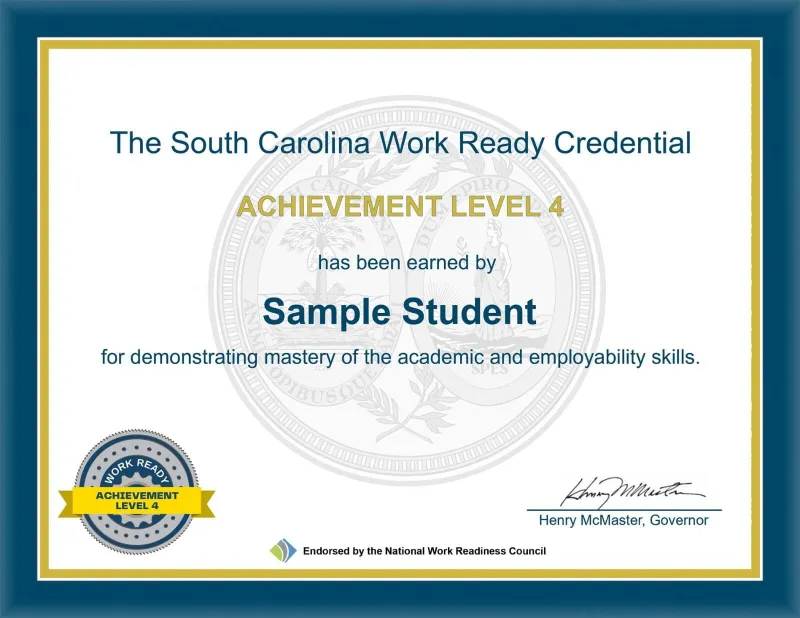
Credentialed but Unprepared: The Widening Gap Between What Training Programs Teach and What Industries Actually Need

Photo: Evgeny2665, CC0, via Wikimedia Commons
Ask a hiring manager in almost any U.S. industry what they are looking for in candidates, and the answer will rarely begin with a degree or a certification. It will begin with something harder to quantify and, increasingly, harder to find.
"I can teach someone the technical framework in six weeks," said one senior director of talent acquisition at a mid-sized financial services firm in Chicago. "What I cannot teach—what takes years and the right kind of exposure to develop—is the ability to read a room, adapt when the plan falls apart, and make a defensible judgment call with incomplete information. That is what I am desperate for. That is what I almost never find on a resume."
His frustration is not unique. It is, in fact, one of the most consistent refrains emerging from hiring conversations across U.S. industries in 2024.
The Certification Paradox
The United States has never produced more credentialed professionals. Enrollment in professional certification programs has grown steadily over the past decade. Corporate learning and development budgets reached an estimated $101 billion in 2023, according to Training Magazine's industry report. And yet, the skills gap—the persistent disconnect between what candidates offer and what employers need—continues to widen.
The World Economic Forum's Future of Jobs Report projects that more than half of all employees will require significant reskilling by 2025. McKinsey's global survey on talent trends found that 87 percent of executives reported experiencing skill gaps in their organizations or expected to within the next few years. These figures are not abstract. They represent real operational friction: projects delayed, decisions deferred, and institutional knowledge that retires faster than it can be replaced.
So where is the breakdown occurring?
What the Curriculum Misses
Formal education and structured training programs are built on a necessary constraint: they must be standardizable, assessable, and scalable. This produces professionals who can pass a test, articulate a framework, and demonstrate competency within a controlled context. What it does not reliably produce is the kind of judgment that comes from navigating ambiguity, surviving a failed initiative, or managing a stakeholder relationship that defies the case study model.
A director of operations at a regional healthcare network in the Southeast put it directly: "We hire people with the right clinical administration credentials, and then we spend the first year teaching them how to actually operate in a complex system. The certification tells me they understand the regulations. It tells me nothing about whether they can lead a team through a crisis at 2 a.m."
The competencies that employers across industries consistently cite as most critical—adaptive problem-solving, cross-functional communication, ethical judgment under pressure, the ability to synthesize ambiguous data into actionable decisions—are precisely the competencies that resist standardized instruction. They are developed through experience, reflection, and exposure to other professionals navigating the same terrain.
The Corporate Training Trap
Internal learning and development programs face a different but related limitation. They are, by design, organizational in scope. They train employees to perform within a specific culture, against specific metrics, using specific tools. This is appropriate and necessary. But it also means that professionals trained exclusively within a single organization's L&D ecosystem develop a narrow frame of reference.
When the market shifts—when a new technology disrupts standard practice, when regulatory changes rewrite the rules, when a competitor introduces a model that renders the current approach obsolete—professionals whose development has been entirely internal are often the least equipped to respond. They have been trained to optimize within a system, not to interrogate it.
"The best people on my team are not the ones who completed every internal training module," noted a vice president of product development at a technology company based in Austin. "They are the ones who are constantly bringing in perspectives from outside—from industry events, from peer conversations, from communities where people are solving the same problems in different ways. That cross-pollination is where real capability gets built."
Where Professional Communities Are Filling the Gap
This is the environment in which industry-specific professional communities are demonstrating disproportionate value. Not as supplements to formal training, but as primary vehicles for the kind of competency development that formal training cannot efficiently deliver.
Peer-driven knowledge sharing operates on a different logic than curriculum-based instruction. It is responsive rather than prescribed. When a member of a professional community raises a challenge they are actively navigating, the responses they receive are grounded in real operational experience—not in a learning objective developed two years ago by a training team. The knowledge exchanged is current, contextual, and immediately applicable.
Cross-company working groups and industry forums create another form of exposure that neither universities nor corporate L&D departments can replicate: the opportunity to observe how the same problem is being solved differently across organizations, sectors, and regions. This comparative perspective is foundational to the kind of adaptive thinking that hiring managers say they cannot find.
A senior partner at a management consulting firm in New York described it plainly: "The professionals who stand out are the ones who have been in rooms where people disagree productively, where assumptions get challenged, where the answer is not in the manual. Professional communities create those rooms. MBA programs try to simulate them. There is a meaningful difference."
Rethinking the Credentialing Conversation
None of this is an argument against formal credentials. Certifications matter. Regulatory compliance requires them. Baseline competency standards exist for legitimate reasons. The argument is, rather, that credentials have been allowed to serve as proxies for capability in ways that do not hold up under scrutiny—and that the institutions responsible for professional development have been slow to acknowledge this.
The more productive frame is one of complementarity. Formal credentials establish a foundation. Professional community engagement builds the structure on top of it. The professionals who are most competitive in today's U.S. labor market are not simply the most credentialed. They are the ones who have combined structured knowledge with the kind of peer-driven, experiential learning that only comes from sustained engagement with a broader professional ecosystem.
For organizations grappling with persistent skills gaps, the implication is practical: investing in employees' participation in external professional communities is not a cultural perk. It is a workforce development strategy with measurable returns.
For individual professionals, the implication is equally direct. The credential on your wall opened the door. What you do in the rooms beyond it—who you learn from, what assumptions you allow to be challenged, how honestly you engage with peers who are navigating the same uncertainties—will determine how far you go once you are inside.