When Credentials Don't Travel: The Quiet Crisis Undermining Professional Mobility Across U.S. Industries
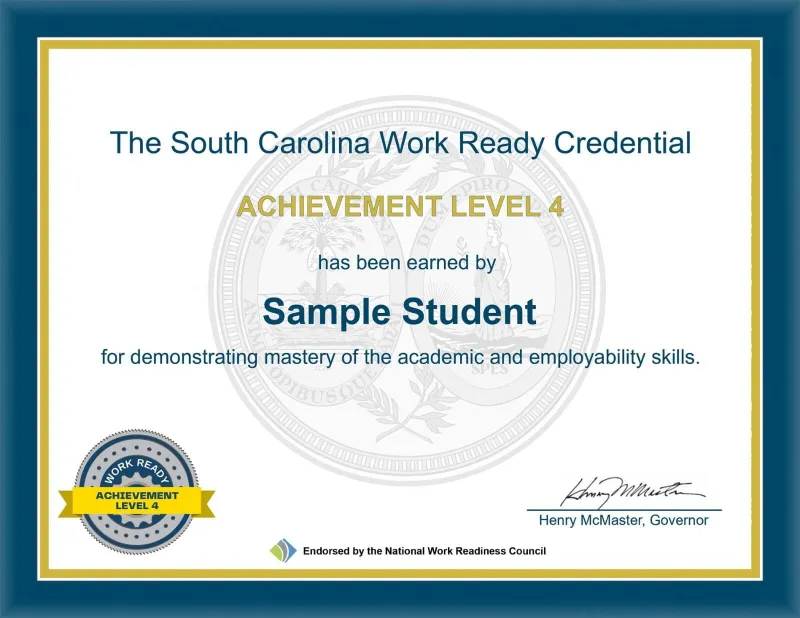
Photo: professional credentials certification documents career mobility office, via www.winlearning.com
For decades, earning a professional license or industry certification was understood as a reliable signal of competence — a durable asset that opened doors and commanded respect. That understanding, while not entirely obsolete, is increasingly insufficient. Across the United States, a growing number of professionals are discovering that their hard-earned credentials carry significant weight within one sector and almost none in another. The result is a quiet but consequential crisis: a workforce full of capable people whose qualifications fail to translate across the very industries that need them most.
This is the problem of credential silos, and it is reshaping how forward-thinking organizations approach talent development, workforce planning, and professional partnerships.
The Architecture of a Fragmented System
The United States has no unified national credentialing framework. Instead, licensure and certification authority is distributed across state governments, industry associations, accreditation bodies, and individual employers — each operating according to its own standards, renewal cycles, and portability rules. A registered nurse licensed in Texas cannot automatically practice in Pennsylvania without navigating a separate application process. A financial advisor holding a FINRA-recognized designation may find that designation carries limited recognition in adjacent fields such as insurance or real estate, even when the underlying competencies overlap substantially.
This fragmentation was not designed with malicious intent. It evolved organically as individual industries sought to protect consumer safety and maintain professional standards within their own domains. But the cumulative effect has been a patchwork system that rewards specialization while penalizing versatility — a serious structural mismatch in an era defined by interdisciplinary work and rapid sectoral change.
According to research from the Brookings Institution, occupational licensing requirements now affect nearly one in four U.S. workers, up from roughly one in twenty in the 1950s. The expansion of licensing has not been accompanied by a corresponding expansion of portability or interoperability. Professionals who wish to pivot careers, relocate across state lines, or contribute to cross-sector initiatives frequently encounter administrative barriers that have little to do with their actual capabilities.
The Cost Is Broader Than Individual Inconvenience
It would be tempting to frame the credential silo problem as a personal inconvenience — an obstacle that individual professionals must simply navigate as part of career management. In reality, the costs extend well beyond the individual level and into organizational and economic territory.
For businesses operating in multiple states or across industry boundaries, credential fragmentation complicates talent acquisition, increases onboarding friction, and limits the pool of eligible candidates for specialized roles. Healthcare systems attempting to deploy telehealth services across state lines, for instance, must contend with a licensing landscape that was designed for an era of geographically fixed care delivery. Technology firms building compliance teams draw from a legal and regulatory talent pool segmented by jurisdiction-specific bar admissions and certification requirements.
Perhaps most significantly, credential silos suppress the kind of cross-pollination that drives innovation. When professionals from adjacent fields cannot easily bring their expertise to bear on shared problems, industries lose the collaborative energy that produces breakthrough thinking. The barriers are not always visible, but their dampening effect on institutional agility is real and measurable.
Emerging Frameworks Designed for a Mobile Workforce
Recognizing these limitations, a number of organizations and policy bodies have begun experimenting with more portable, competency-based approaches to professional verification. The shift represents a meaningful departure from the traditional model, which tends to emphasize the completion of a specific educational or examination pathway over demonstrated, transferable skills.
Micro-credentialing platforms — including those affiliated with major universities, professional associations, and technology companies — have gained considerable traction as supplemental verification tools. These digital badges and stackable certificates allow professionals to document specific competencies in a format that is both verifiable and platform-agnostic. While they do not replace formal licensure in regulated industries, they are increasingly recognized as legitimate indicators of capability in fields where formal licensing requirements do not exist or are still evolving.
The Interstate Medical Licensure Compact, the Nurse Licensure Compact, and similar multi-state agreements in fields ranging from physical therapy to emergency management represent another structural response to the portability problem. These compacts allow qualifying professionals to practice across member states without submitting separate applications to each jurisdiction — a model that, if extended to additional fields, could substantially reduce the administrative burden on mobile professionals.
At the organizational level, some of the most innovative employers are moving toward internal skills frameworks that evaluate candidates and employees based on demonstrated competencies rather than credential labels alone. This approach allows organizations to recognize expertise that may have been developed through non-traditional pathways and to identify transferable skills that conventional credentialing systems tend to obscure.
What Forward-Thinking Organizations Are Doing Differently
Professional associations and industry bodies play a particularly important role in this transition. Organizations that have historically served as gatekeepers of credentialing standards are now being called upon to function as bridges — facilitating recognition agreements with peer bodies in adjacent fields, advocating for policy changes that expand credential portability, and investing in the development of shared competency frameworks that cut across sector boundaries.
For member-serving organizations like NPW USA, this represents both a responsibility and an opportunity. Professionals who participate in robust industry networks are better positioned to understand how their credentials translate across sectors, to identify emerging verification standards before they become industry norms, and to build the kinds of cross-disciplinary relationships that make career pivots more navigable.
Networking, in this context, is not merely a social activity. It is an intelligence function — one that helps professionals stay ahead of a credentialing landscape that is changing faster than most regulatory frameworks can accommodate.
The Path Forward
The credential silo problem will not be resolved through any single policy change or technological solution. It requires a coordinated response from industry associations, state and federal regulators, educational institutions, and employers — each of whom has a stake in building a professional ecosystem that is both rigorous and responsive.
For individual professionals, the most immediate actionable step is to invest in understanding how their existing credentials are perceived outside their primary industry, and to supplement formal licensure with portable, verifiable demonstrations of competency wherever possible. For organizations, the priority should be developing talent strategies that are not entirely dependent on credential labels — strategies that can identify capable professionals regardless of the specific pathway through which their expertise was acquired.
The professionals and organizations that thrive in the years ahead will not be those who accumulated the most credentials. They will be those who built the clearest, most transferable picture of what they actually know and what they can actually do. In a system still struggling to recognize that distinction, that clarity is itself a competitive advantage.