Bigger Networks, Thinner Bonds: The Trust Crisis Quietly Undermining American Professional Life
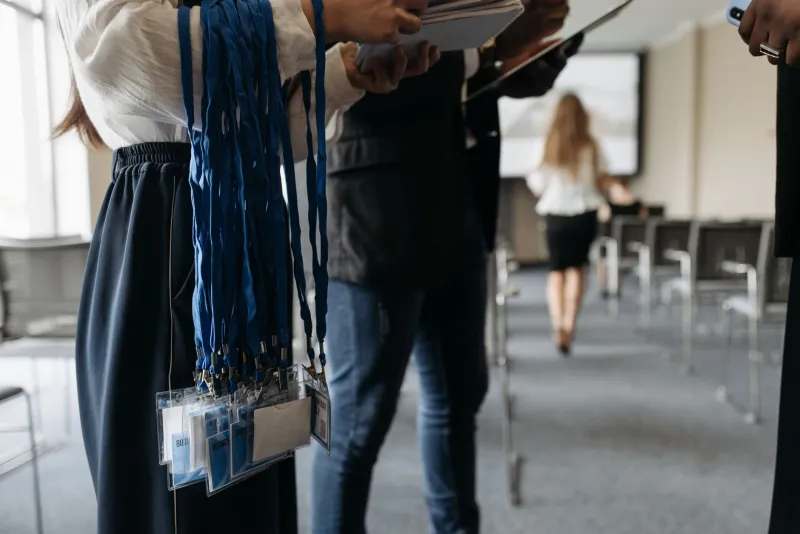
On paper, the American professional is better connected than at any point in history. LinkedIn profiles list hundreds of connections. Conference calendars fill months in advance. Industry Slack channels buzz with activity around the clock. By every measurable metric, networking has never been more accessible, more frequent, or more visible.
And yet, ask professionals in boardrooms, breakout sessions, or candid one-on-one conversations whether they genuinely trust their industry peers—and the answer, more often than not, is a qualified no.
This is the collaboration paradox: a professional landscape in which activity has surged while authentic trust has quietly eroded. Understanding why this is happening—and what it costs industries and individuals alike—requires looking past surface-level connection counts and examining the mechanics of how professional relationships are actually being built today.
When Quantity Replaced Quality as the Networking Standard
The rise of digital platforms fundamentally changed the economics of professional networking. Adding a connection on a platform costs nothing. Attending a virtual event requires little more than a functioning internet connection. Following an industry thought leader takes a single click. These frictionless interactions expanded the theoretical reach of every professional's network—but they also stripped away the conditions under which trust historically developed.
Trust, at its core, is built through repeated interaction, demonstrated reliability, and shared risk. A colleague who helped you navigate a difficult client situation, a mentor who gave you honest feedback when it was inconvenient, a partner who delivered on a commitment when no one was watching—these are the relationships that generate genuine professional trust. They take time, vulnerability, and a degree of mutual investment that a LinkedIn endorsement or a conference handshake simply cannot replicate.
When the dominant networking model shifted toward volume and visibility, the conditions for that kind of trust-building became harder to sustain. Professionals began optimizing for breadth—and in doing so, inadvertently sacrificed the depth that makes collaboration genuinely productive.
The Competitive Pressure Accelerant
Digital platforms alone do not fully explain the trust deficit. Competitive pressure within industries has intensified the problem considerably.
In sectors ranging from financial services to healthcare administration to technology, the pace of market change has compressed timelines, increased stakes, and heightened the perceived cost of being outmaneuvered by a peer. When professionals view their networks simultaneously as resources and as competitive landscapes, every interaction carries an undercurrent of strategic calculation. Information shared freely at a networking event might benefit a competitor. A referral extended to a colleague might redirect an opportunity. Transparency, which is the foundation of trust, begins to feel like a liability.
This dynamic is particularly pronounced in industries experiencing consolidation or disruption, where the professional community is smaller than it appears and relationships can shift quickly from collaborative to adversarial. In such environments, professionals learn—often through experience—to hedge their openness, withhold certain insights, and maintain a degree of strategic distance even within relationships that nominally appear close.
The result is a professional culture that performs collaboration without fully committing to it.
Transactional Relationships and the Erosion of Industry Cohesion
Perhaps the most consequential outcome of this shift is what it has done to industry cohesion. When professional relationships are primarily transactional—governed by immediate utility rather than shared investment in a field's broader health—the connective tissue that holds industries together begins to weaken.
Industry associations, peer mentorship structures, and knowledge-sharing communities all depend on a baseline of goodwill and reciprocity that transactional networking actively undermines. Professionals who approach every interaction with the implicit question of "what does this person offer me right now" are less likely to contribute to the commons: sharing hard-won knowledge, supporting emerging talent, or advocating for industry-wide standards that benefit everyone but advantage no single party.
This erosion is difficult to measure and easy to overlook precisely because the surface indicators—attendance figures, platform engagement, event registrations—continue to trend upward. Industries can appear vibrantly connected while quietly losing the trust infrastructure that makes meaningful collaboration possible.
What the Research and Real-World Signals Suggest
While comprehensive longitudinal data on professional trust is difficult to compile, the signals from multiple directions are consistent. Surveys conducted across U.S. industries in recent years have repeatedly found that professionals report high levels of networking activity alongside low levels of confidence in their peers' intentions. Researchers studying organizational behavior have documented a rise in what some describe as "performative collaboration"—cooperative behavior that is visible and measurable but lacks genuine mutual commitment.
Anecdotally, the pattern is familiar to anyone who has spent time in professional communities. The follow-up that never arrives. The introduction offered but never facilitated. The partnership discussion that stalls once the immediate need has passed. These are not isolated failures of individual character; they are symptoms of a systemic shift in how professional relationships are structured and valued.
Rebuilding Trust in a High-Volume Networking Era
The solution is not to abandon networking—it is to be far more deliberate about what networking is actually for.
Organizations and professional communities that are successfully navigating this paradox tend to share several characteristics. They create structured opportunities for smaller, more sustained engagement rather than relying exclusively on large-scale events. They establish norms of reciprocity that are explicit rather than assumed. They invest in accountability mechanisms—peer review processes, mentorship commitments, collaborative projects with defined deliverables—that give trust something concrete to attach itself to.
For individual professionals, the recalibration is equally important. Auditing one's network for depth rather than breadth—identifying the relationships that involve genuine mutual investment and deliberately nurturing them—is a more productive use of professional time than continuing to expand a wide but shallow contact base.
Choosing industry communities and associations that prioritize substantive engagement over volume is another meaningful step. Platforms and organizations that vet membership, structure peer interaction around shared professional goals, and create accountability within their communities offer the conditions under which trust can actually develop.
The Longer View
Industries are only as strong as the trust that moves through them. When professionals cannot rely on peers, cannot share knowledge openly, and cannot enter partnerships with reasonable confidence in the other party's commitment, the entire ecosystem becomes less innovative, less resilient, and less capable of addressing the challenges that no single organization can solve alone.
The collaboration paradox is, at its core, a warning. More connections have not made American professional life more collaborative—they have made the absence of genuine trust more visible. Addressing that absence requires moving beyond the metrics of networking activity and asking a harder question: are the relationships being built actually capable of bearing weight when it matters?
For industries and the professionals who shape them, that question is worth sitting with—regardless of how many connections a profile currently lists.